
The term “data analysis” refers to the process by which large amounts of raw data are reviewed in order to determine conclusions based on that data. The data is often unorganized, and may come from different sources.
The nature of data analysis varies and correlates to the type of data being examined. For example, a business may concentrate on things such as determining employee performance, or sales performance by department, sales person, etc. An economist, however, might look for identifiable patterns that explain the spending habits of various consumers.
Types of Data Analysis
There are many different types of data analysis, all geared towards the nature of the data being analyzed. Generally speaking there are two broad categories: “quantitative analysis” and “qualitative analysis.”
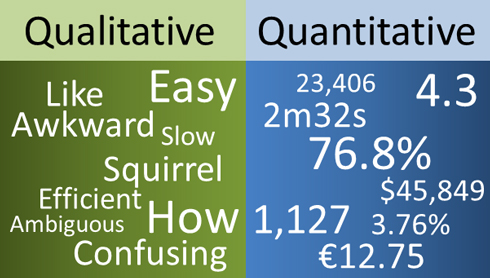
Qualitative Analysis:
Qualitative analysis deals with the analysis of data that is categorical in nature. In other words, data is not described through numerical values, but rather by some sort of descriptive context such as text.
Once data is gathered it then needs to be interpreted. Often times this involves “coding”, which refers to the grouping of data into identifiable themes. Themes are then given a unique “label”, and each label can then be quickly grouped and contrasted to each other.
Data must also be interpreted. Interpretation can be a part of the coding process, but this is not always the case.
Qualitative analysis can be summarized by three basic principles:
1). Notice Things
2). Collect Things
3). Think About Things
Quantitative Analysis:
Quantitative analysis refers to the process by which numerical data is analyzed, and often involves descriptive statistics such as mean, media, standard deviation, etc.
An in-depth discussion of quantitative analysis is beyond the scope of this blog post. Generally speaking, however, the following are often involved with quantitative analysis:
- Statistical Models
- Analysis of variables
- Data Dispersion
- Analysis of Relationships Between Variables
- Contingence and Correlation
- Regression Analysis
- Statistical Significance
- Precision
- Error Limits
Benefits of Data Analysis
The main benefits of data analysis are rather self-evident. How can someone improve their processes and identify problematic issues if they are not willing to look at the data? The answer, of course, is that they cannot make reliable improvements without data analysis. The key word here is “reliable”. Most people have a general idea about possible changes that “should” or “could” improve their processes. However, when it comes to these sorts of changes, there is the inherent risk that the change does not have the desired result. There can also be unexpected consequences that impact some other aspect of that organization in a negative manner.
Having said that, the following are just some of the benefits of proper data analysis:
- Allows for the identification of important (and often mission-critical) trends
- Helps businesses identify performance problems that require some sort of action
- Can be viewed in a visual manner, which leads to faster and better decisions
- Better awareness regarding the habits of potential customers
- It can provide a company with an edge over their competitors